
About the same time the book of Revelation was written, a Jewish historian named Josephus, who was not a Christian, wrote about Jesus. Though the wording of the full passage has been debated, the basic testimony is striking: Jesus was known as a wise man, a worker of remarkable deeds, a teacher, one who gained followers, was crucified under Pilate, and whose followers did not disappear:
“Around this time there lived Jesus, a wise man—if it is right to call him merely a man. He performed remarkable works and was a teacher of people who gladly received the truth. He attracted many Jews and many Gentiles. He was the Christ. When Pilate, at the urging of our leading men, condemned him to the cross, those who had loved him from the beginning did not abandon him. For he appeared to them alive again on the third day, just as the divine prophets had foretold this and many other wonderful things about him. And the tribe of Christians, named after him, has not disappeared to this day.”
It is possible to know many true things about Jesus and still miss the weight of His worth. Josephus could describe Him as a wise man, a worker of remarkable deeds, a teacher, and one condemned to the cross. But Revelation 5 pulls back the curtain of heaven and shows us what all creation will one day confess: Jesus is not merely remarkable. He is worthy.
The following is a list of twelve windows into the glory of the Lamb and why it is that He is worthy.
Jesus is worthy because He is Judah’s Lion (v. 5)
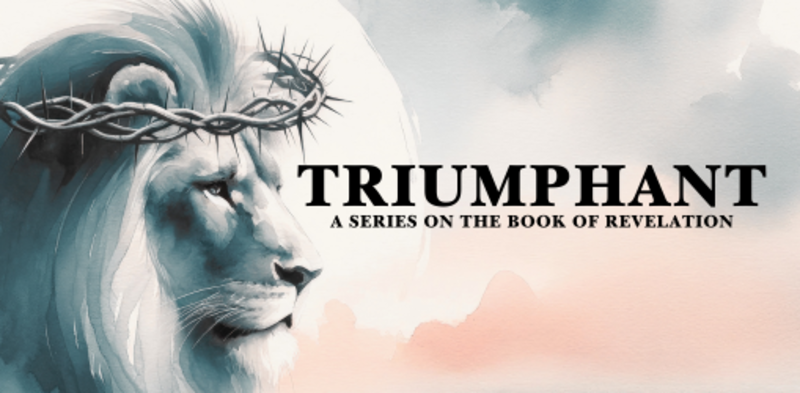
Judah was a deeply flawed man who sold his younger brother Joseph into slavery, deceived his father, abandoned his daughter-in-law, and hid behind hypocrisy. But God changed Judah’s heart, and by Genesis 44, Judah was willing to sacrifice himself to save Benjamin, the youngest son who was dearly loved by their father. Later, Jacob blessed Judah with a promise that the promised serpent-stomping King would come through him: “Judah is a lion’s cub... The scepter shall not depart from Judah, nor the ruler’s staff from between his feet, until tribute comes to Him; and to Him shall be the obedience of the peoples” (Gen. 49:9–10). That promise finds its fulfillment in Jesus Christ. Jesus is more than Judah’s descendant; He is Judah’s promised Lion—the true and better Judah who offered Himself as the sinless Substitute for His people. He is the One to whom the scepter belongs, the One before whom the obedience of the peoples will one day be gathered. He is the Lion of the tribe of Judah, and He has conquered sin, death, and the dragon.
Jesus is worthy because He is God’s Lamb (v. 6)
We cannot have the Lion as our friend unless we first have Him as our Lamb, for Scripture declares, “without the shedding of blood there is no forgiveness of sins” (Heb. 9:22; see Lev. 17:11). This theme runs throughout the Bible. In Genesis 22, Isaac carried the wood for the sacrifice and asked, “Where is the lamb for a burnt offering?” Abraham answered, “God will provide for Himself a lamb” (Gen. 22:7–8). In Exodus 12, Israel was sheltered from wrath by the blood of the spotless lamb, and in Isaiah 53, the suffering Servant is portrayed as the Lamb pierced, crushed, and slaughtered for the iniquities of guilty sinners. So when John the Baptist cried out, “Behold, the Lamb of God, who takes away the sin of the world” (John 1:29), he summed up the promises and the point of the Old Testament. Jesus is the Lamb God provided, the Passover Lamb whose blood shelters His people from judgment, the sacrificial Lamb whose blood makes atonement, and the suffering Lamb who bears our sins. Apart from the blood of the Lamb, the Lion is not our comfort but our Judge. But for those covered by His blood, there is no condemnation. Those of us who have the Lamb know that the Lion is not against us but for us.
Jesus is worthy because He can take the scroll (v. 7)
He alone has the right to receive and enact God’s plan to judge evil, redeem His people, and restore creation. The scroll contains the sovereign plan of the Lord God Almighty—the One who says in Isaiah 46: “I am God, and there is no other… declaring the end from the beginning… saying, ‘My counsel shall stand, and I will accomplish all my purpose’” (Isa. 46:9–10). The scroll is in the right hand of this God, and when no one in heaven, on earth, or under the earth was found worthy to open it or even look into it, John wept bitterly. If the scroll remains sealed, God’s promises remain unfulfilled, sin and death are not finally defeated, the saints are not vindicated, and creation is not restored.
But the Lion who is the Lamb came forth because He alone is worthy to open the scroll. He took it from the right hand of the Father. This was not theft but triumph. This was not presumption but due to the worthiness of the Preeminent Lamb. Jesus alone has the right to open the scroll because He alone has conquered by His blood. The destiny of creation is in the nail-scarred hand of the Lamb who is the Kinsman-Redeemer.
Jesus is worthy because He is the unconquerable King (v. 6)
When John turns to see the Lion worthy to open the scroll, he sees “a Lamb standing, as though it had been slain.” The One who knew no sin and became sin for us bears every scar from the cross as a reminder that His sacrifice was once for all: “the righteous for the unrighteous” (1 Pet. 3:18)! The Lamb stands because death could not keep Him. The Lamb stands because the grave could not hold Him! The Lamb stands even though He was rejected by men, condemned by rulers, mocked by the religious leaders, and nailed to the cross... He stands at the center of heaven’s throne room, victorious. His wounds testify to His triumph. The Lamb who was slain is worthy because He is the King who cannot be conquered.
Jesus is worthy because He is the Omniscient King (v. 6)
The unconquerable King is seen with seven horns and seven eyes. As you may recall, in Scripture, horns symbolize strength, power, and sovereign authority, while eyes symbolize sight, wisdom, and knowledge. The number seven points to fullness and perfection, which means the Lamb who was slain is not weak but all-powerful, not limited but limitless, not unaware but all-seeing. He shares the wisdom and sovereignty of the Ancient of Days. Nothing escapes His sight. No enemy can hide from Him. No suffering saint is forgotten by Him. No act of faithfulness goes unnoticed by Him. The Lion, who is the Lamb, sees all and reigns over all by the fullness of the Spirit sent into all the earth. Jesus is worthy because He is the King whose reign is as extensive as His holiness, goodness, justice, love, grace, and mercy.
Jesus is worthy because He is creation’s Lord (vv. 7-8)
The living creatures and elders fall before Him because the Lamb is creation’s Lord through Whom all of creation exists. The four living creatures represent the created order, and the twenty-four elders represent the redeemed people of God. The worship that belongs to the Lord God Almighty is directed to Jesus not only because of what He has done, but also because of who He is. All things were created through Him and for Him (Col. 1:16), and now all creation bows before Him as One who is equal with the Father. The Lamb who was slain is worthy because He is the Creator, Sustainer, Redeemer, and rightful Lord over all things.
Jesus is worthy because He was slain as the sinner’s ransom (v. 9)
The blood of the Lamb is the price of our redemption. The new song of heaven celebrates this: “Worthy are you to take the scroll and to open its seals, for you were slain, and by your blood you ransomed people for God from every tribe and language and people and nation...” The Lion of Judah is the willing Lamb who stands before those He came to save; He is the Kinsman-Redeemer that creation needs. The price was not the religious deeds of fallible man, but the life of the second Adam, who lived the life we could not live and died the death we deserved. We were once enslaved by sin and stood condemned before God as guilty sinners, but Jesus gave His life to ransom us and set us free for God. Jesus is worthy because He was slain in our place, bore the judgment we deserved, paid the debt we could not pay, and purchased us by His precious blood.
Jesus is worthy because He redeemed a people for mission (vv. 9-10)
Jesus did not ransom, redeem, and save sinners from condemnation merely so they could occupy space in His kingdom; He redeemed them for His kingdom purposes. We are not only forgiven of our sins; we are restored to the purpose for which humanity exists. Jesus saved us to send us into the world as His ambassadors and the Father’s priests. We are priests before God, and we live under the reign of Christ as citizens of His kingdom. This is why Peter says, “But you are a chosen race, a royal priesthood, a holy nation, a people for His own possession, that you may proclaim the excellencies of Him who called you out of darkness into His marvelous light” (1 Pet. 2:9). Jesus is worthy not only because He rescued us from the wrath of God we deserved, but also because He restored us to what we were created to be.
Jesus is worthy because He is the song of the angels (vv. 11-12)
After the song of the four living creatures and the new song of the twenty-four elders, John turns his attention to what he hears around the throne. What he hears is an innumerable host of angels resounding with praise:
“Worthy is the Lamb who was slain,
to receive power and wealth and wisdom and might
and honor and glory and blessing!”
The angels erupt in praise after those who represent redeemed humanity conclude theirs. Why? Because the second person of the Trinity took upon Himself human flesh, was born of a virgin, and came to redeem a lost, rebellious, and cursed race (Phil. 2:1-11). This is something angels find baffling, for Peter tells us that our salvation is something “angels long to look” into (1 Pet. 1:12). What the angels offer in worship is a sevenfold declaration of what belongs only to Yahweh. To give this kind of worship to anyone else would not merely be inappropriate; it would be idolatrous. You cannot see it clearly in English, but in the Greek there is one definite article governing the entire sevenfold list attributed to the Lamb. The point is simple: Jesus is worthy to receive the power, the wealth, the wisdom, the might, the honor, the glory, and the blessing that belong to the One true God. In his commentary on Revelation, Richard Phillips captures the wonder of this angelic worship well:
Like that of the glorified church, the angels’ worship responds to Christ’s atoning death on the cross. Their testimony therefore shows that what once seemed like defeat for Jesus has been revealed as total victory. The cross was seen as weakness but was actually power; the cross displayed poverty but gained true riches; the cross was foolishness to the world but wisdom from God; the cross represented shame but earned the highest honor for Christ; the cross was a place of deep disgrace, yet revealed the very glory of God’s grace; and the cross stood for the curse of sin but achieved eternal blessing for those on whose behalf Jesus died.
The One who was slain is now declared worthy by countless heavenly beings. Jesus is worthy because all of heaven knows what earth so often forgets: the Lamb who was slain is worthy of the glory that belongs to God alone—because He is God.
Jesus is worthy because He is creation’s celebration (v. 13)
The worship does not end with the millions of angels, the twenty-four elders, or the four living creatures. John hears more. He hears every creature “in heaven and on earth and under the earth and in the sea, and all that is in them,” declaring in worship: “To Him who sits on the throne and to the Lamb be blessing and honor and glory and might forever and ever!” What John witnesses is not universal admiration, but the worship of every creature directed to God and to the Lamb.
The One who was rejected and despised by men is celebrated by creation. The One who was crucified and crushed outside the city is praised throughout the universe. Jesus is worthy because He is the Lamb before whom every creature will one day bow in worship.
Jesus is worthy because He deserves everything (vv. 12-13)
Jesus is worthy to receive the power, wealth, wisdom, might, honor, glory, and blessing that belong to the Lord God Almighty. Every creature appropriately joins the heavenly worship by declaring, “To Him who sits on the throne and to the Lamb be blessing and honor and glory and might forever and ever!” Heaven holds nothing back, and creation attributes to the Lamb what rightfully belongs to Yahweh alone.
All power belongs to Him because He reigns. All wealth belongs to Him because all things are His. All wisdom belongs to Him because His ways are perfect. All might belongs to Him because He has conquered. All honor belongs to Him because He is exalted. All glory belongs to Him because He is God. All blessing belongs to Him because all praise is His due. Jesus is worthy because He embodies, in infinite measure, all that is good, glorious, powerful, beautiful, and praiseworthy.
Jesus is worthy because He is the Amen of the Father (vv. 13-14)
Jesus did not need to earn the praise He receives from the four living creatures, the twenty-four elders, the angels, and all creation; He is worthy because of who He is. In the same way the Father is unchanging, Jesus is unchanging, for Scripture testifies, “Jesus Christ is the same yesterday and today and forever” (Heb. 13:8). In response to the worship and praise Jesus receives as the One worthy to take and open the scroll, the four living creatures respond, “Amen!”—a word that means, “Truly,” “Let it be so,” “This is true.” But do not misunderstand what they are doing. They are not only saying “Amen” to Jesus as the One who is worthy; they are saying “Amen” because He Himself is the Amen of God the Father. Jesus is the faithful and true witness, the One in whom every promise of God finds its fulfillment. As Paul writes, “For all the promises of God find their Yes in Him. That is why it is through Him that we utter our Amen to God for His glory” (2 Cor. 1:20).
Revelation 5 begins with the question, “Who is worthy?” But after the Lion who is the Lamb takes the scroll, it ends with heaven, earth, and every creature confessing through worship that He alone is worthy. There is nothing left to say but “Amen,” and nothing left to do but fall down and worship.
Conclusion
Jesus is worthy before the angels sing that He is.
Jesus is worthy before creation celebrates that He is.
Jesus is worthy before the elders fall down because of who He is.
Jesus is worthy before you and I respond to all that He is!
Jesus is worthy.
Our worship does not make Him worthy.
Our worship simply agrees with what is already true.
The question is not whether Jesus is worthy—heaven has already declared it, and creation will one day echo that truth. There will come a time when every knee will bow, every tongue will confess, and all creation will acknowledge what has always been true (Isa. 45:23; Phil. 2:9-10): the Lamb who was slain is worthy.
The question I leave with you today is whether your heart, your obedience, your faith, your suffering, your worship, and every other part of your life will respond with “Amen” to the Lamb who is worthy. So, do not wait until every creature sings to join the song of heaven. Sing now. Trust Him now. Follow Him now and may Psalm 119:37 be your heart’s cry: “Turn my eyes away from worthless things; revive me with Your word” (Ps. 119:37; BSB).

