
In the 1870s, Charles Taze Russell began leading Bible classes in Pittsburgh, Pennsylvania, with a small group that came to be known as Bible Students. In 1879, he began publishing a Bible journal later known as The Watch Tower.Then, in 1884, he incorporated what became the Watch Tower Bible and Tract Society. Through Russell’s publishing work, the movement spread beyond Pennsylvania and eventually laid the foundation for what later became Jehovah’s Witnesses under Joseph Rutherford.
Russell rejected several historic Christian doctrines, including eternal conscious punishment in hell and, most seriously, the doctrine of the Trinity. After Russell died in 1916, Rutherford became president of the Watch Tower Society in 1917. Under his leadership, the movement became more centralized and aggressive in its evangelism, and in 1931 the name Jehovah’s Witnesses was adopted.
The Watch Tower Society is not merely another Christian denomination. It is a cult that rejects essential doctrines of the Christian faith, including the Trinity and the full deity of Jesus Christ. To be clear, misunderstanding Revelation 7 or using poor hermeneutical principles does not automatically mean someone will develop a cult or reject the core tenets of the Christian faith as Russell, Rutherford, and the Jehovah’s Witnesses have done. Many faithful Christians have differed over the meaning of the 144,000. But the Watch Tower Society shows us why careful interpretation matters. When Scripture is mishandled repeatedly and forced into a system, the results can be spiritually dangerous.
Revelation 7 is one of the passages central to their teaching. Jehovah’s Witnesses teach that the 144,000 in Revelation 7 and 14 are a literal number of anointed Christians who will be resurrected to heavenly life to reign with Christ as kings and priests. They also teach that the great multitude in Revelation 7:9–12 is a separate group with an earthly hope—those who survive Armageddon and live on a restored earth.
I mention this because Revelation 7 shows us why context matters. When this chapter is separated from the question at the end of Revelation 6, it can be made to say things John is not saying. John is not trying to create two separate classes of God’s people. He is answering the question, “Who can stand?” So as we come to this passage, we need to pay careful attention to what John hears and sees, allowing Scripture itself to serve as our primary commentary before we look to any system to determine the meaning of the text.
The People of the Lamb are Sealed by God (vv. 1-8)
At the end of Revelation 6, with the opening of the sixth seal and the first description of the Day of the Lord, we are left with one of the book’s most haunting questions: “for the great day of their wrath has come, and who can stand?”(Rev. 6:17). The kings of the earth cannot stand. The powerful cannot stand. The wealthy cannot stand. The strong cannot stand. Neither slave nor free can stand, as all hide among the rocks and mountains, begging creation to conceal them from the face of Him who is seated on the throne and from the wrath of the Lamb. So who can stand? Revelation 7 gives the answer.
Before the seventh seal is opened, John is shown another vision, but do not think of this vision as occurring strictly after the sixth seal and before the opening of the seventh. Instead, if the seals were acts in a theatrical production, what happens in Revelation 7 shows us what is happening behind the curtain sometime during the sixth seal and before the seventh. Throughout Revelation, the visions often pause, circle back, or open a new window to help us understand more clearly what God is doing. In this case, Revelation 7 functions as an interlude between the sixth and seventh seals, answering the question raised at the end of chapter 6.
John then sees four angels who are “standing at the four corners of the earth,” each holding “back the four winds of the earth” (v. 1). We are told they do this so that no wind blows on the earth, sea, or any tree. What John sees is not four angels manipulating the weather. Likewise, the four corners of the earth is not a description of the earth’s shape or design. As you are aware, the number four often points to the created order in Scripture. What you may not be aware of is that the four winds frequently symbolize judgment. Because Revelation is a picture book rather than a puzzle book, the image John sees is one of restraint. The message conveyed is that judgment is being held back.
Listen, every day before the final Day is a day of mercy, a day of restraint, and a day for the Lamb to gather His people. What is being shown and communicated to us in these verses is that we are living in a time of divine restraint as we move closer to the Day of the Lord. The world is not free from judgment, but the final winds of judgment have not yet been unleashed.
What judgment is being held back? The judgment described in the sixth seal. As to why it is being held back, we do not have to wait long for an answer, because in the very next verse we are told that a fifth angel, ascending from the rising of the sun, declares with a loud voice: “Do not harm the earth or the sea or the trees, until we have sealed the servants of our God on their foreheads” (v. 3).
Do you now see why context is so important? The angel’s declaration answers the question, “Who can stand?” Those who can stand are those who belong to God. Before judgment is unleashed, God marks His people as His own. The earth, sea, and trees are not harmed until the servants of God are sealed. This does not mean God’s people will avoid all suffering, for we have already seen in the fifth seal the souls under the altar crying out in a loud voice, “O Sovereign Lord, holy and true, how long...” (Rev. 6:10). What it does mean is that the coming judgment will not sweep God’s people away under His wrath, for He knows who belongs to Him.
The four winds of God’s judgment do not descend upon the earth in blind rage. When God executes justice, His wrath is holy, measured, and righteous. He does not fly off the handle. Before the wrath of the Lamb is poured out, the people of the Lamb are sealed by the God who embraces them as His children. This distinction is not new in Scripture. In Exodus 12, God distinguished His people from Egypt by the blood of the lamb. A stronger parallel appears in Ezekiel 9, where God marked those who grieved over Jerusalem’s sin before judgment fell on the nation. In both cases, God identified those who belonged to Him before judgment fell on the wicked.
This is what is happening in Revelation 7. The seal on the foreheads of God’s servants is not a literal, physical mark. It signifies that they belong to the living God. This language appears throughout the New Testament. Paul wrote in Ephesians 1 that those who believe in Christ are “sealed with the promised Holy Spirit” (Eph. 1:13). This sealing is possible because of the blood Jesus shed on the cross as the Lamb of God, and it is received by faith (Eph. 2:1–9). The seal is God’s mark of ownership, assurance, and future inheritance. It is not first a statement about the strength of our faith in Him, but about the certainty of God’s possession. He promises never to let His redeemed go (John 10:27–30). Those who belong to the Lamb are not hidden from God, forgotten by God, or abandoned in the day of trouble. They belong to God.
This all seems clear enough, but the passage can become confusing when it says that those who are sealed are also numbered. Verse 4 says, “And I heard the number of the sealed, 144,000, sealed from every tribe of the sons of Israel” (v. 4). Here, we must not only pay careful attention to the context of Revelation 7 but also do what Revelation has already taught us to do: pay attention to what John hears and what John sees.
What John hears is “the number of the sealed, 144,000, sealed from every tribe of the sons of Israel” (v. 4). Many have understood this as a literal number of ethnic Israelites, primarily because John goes on to name the tribes in a specific order. Some believe the 144,000 are a specific group of ethnic Jewish Christians who come to faith in Jesus during a future seven-year tribulation and serve as evangelists after the rapture. I understand why many read it that way, but there are some problems with that interpretation. First, Revelation 7 functions as an interlude—a symbolic pause within the vision—rather than a chronological sequence following the great Day of the Lord described in 6:12–17. Second, Revelation often follows a pattern in which what John sees clarifies what he first hears. So before we assume the 144,000 is a literal headcount, we need to pay attention to how numbers and images function in this book.
Listen, the number twelve is associated with the people of God—the twelve tribes of Israel and the twelve apostles of the Lamb. The number one thousand signifies immensity, fullness, and completeness. This is why the psalmist describes God’s ownership by saying, “For every beast of the forest is mine, the cattle on a thousand hills” (Ps. 50:10). It is not that God only owns the cattle on one thousand hills and not hill number one thousand and one. The point is fullness. Everything belongs to Him. Likewise, when Moses speaks of God’s covenant faithfulness, he says, “Know therefore that the Lord your God is God, the faithful God who keeps covenant and steadfast love with those who love him and keep his commandments, to a thousand generations...” (Deut. 7:9). So, what do you get when you take the twelve tribes of Israel, multiply them by the twelve apostles of the Lamb, and then multiply that by the fullness of the covenant-keeping faithfulness of God (12x12x1000)? You get 144,000. In other words, this is not about limiting the people of God. It is about showing us that every one of God’s people is known by God, sealed by God, and secure in God through the blood of the Lamb.
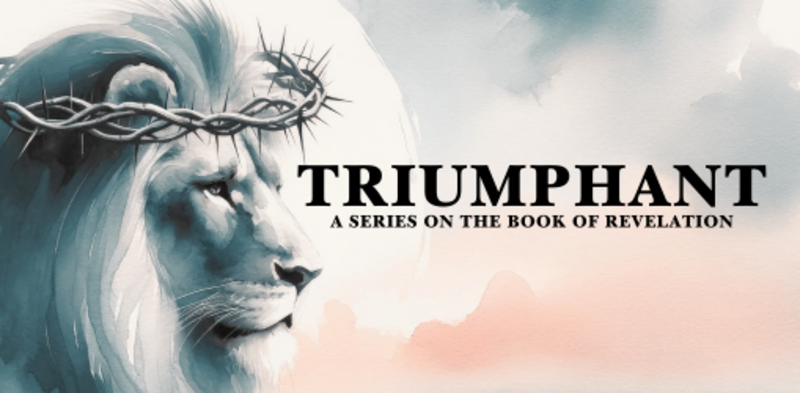
This is also why the tribes John lists begin with Judah. Reuben was the firstborn, but Judah is listed first because the Lion of the tribe of Judah has conquered. The people of God are numbered, sealed, and secure because they belong to the Lamb who came from Judah. Even the list itself urges us to read carefully. John is not simply giving us a standard tribal roll call; he is showing us the complete people of God through the imagery of Israel’s tribes.
The People of the Lamb are Gathered by God (vv. 9-12)
Now, if you miss what I am about to say next, you will miss the point of Revelation. John hears the number of the sealed people of God described as 144,000 from the tribes of Israel, but when he looks, he sees “a great multitude that no one could number, from every nation, from all tribes and peoples and languages” (v. 9). John hears of 144,000 sealed from every tribe of the sons of Israel, but when he looks, he sees a great multitude from every nation, tribe, people, and language. What John sees is not a different people from the 144,000; it is the reality of God’s promise to Adam and Eve, to Noah, to Abraham, to Isaac, to Jacob, to David, and to Mary. What John sees is the promise of God to every generation of His people coming into full bloom. The Lamb who was slain has purchased people for God from every tribe and language and people and nation, just as Revelation 5 declared.
This should not surprise us, because the salvation of the nations was never God’s contingency plan. It was His purpose from the beginning. When God called Abraham, He promised that “all the families of the earth” would be blessed through him (Gen. 12:1–3). That blessing comes through Abraham’s Seed, who is Christ (Gal. 3:26–29). So Revelation 7 does not show us Israel’s replacement but the fulfillment of God’s promise through Israel’s Messiah, gathering Jews and Gentiles into one redeemed people before the throne.
This is also where Revelation 5 helps us understand Revelation 7. In Revelation 5, the elders sing that the Lamb purchased people for God by His blood “from every tribe and language and people and nation” and made them “a kingdom and priests to our God” (Rev. 5:9–10). In Revelation 7, John sees that kingdom of priests standing before the throne and the Lamb. What was promised in Genesis is now seen in glory: “a great multitude that no one could number, from every nation, from all tribes and peoples and languages” (Rev. 7:9).
So when John sees the nations gathered before the Lamb, he sees Israel’s hope fulfilled and expanded through Israel’s Messiah. The Lamb has gathered a people from the nations, and now they stand where no one in Revelation 6 could: before the throne and before the Lamb.
Conclusion
I want to leave you with the three A’s of Revelation 7, and here is why: eschatology does little good in the Christian life unless it affects your ethics. We are called to live each day in light of the Day that is coming. So, here are the three A’s:
Assurance
If you believe in Jesus Christ, confess Him as Lord, and desire to follow and obey Him, then you are sealed by God. Here is what the Bible says: “if you confess with your mouth that Jesus is Lord and believe in your heart that God raised him from the dead, you will be saved. For with the heart one believes and is justified, and with the mouth one confesses and is saved” (Rom. 10:9–10). If this is true of you, then you are sealed by God, and if you are sealed by God, then 1 John 3:1 is for you: “Behold what manner of love the Father has given to us, that we should be called children of God. And that is what we are!” (1 John 3:1, BSB). If you belong to the Lamb, then you are known by God, sealed by God, and secure in God.
Allegiance
If you call yourself a Christian, does your life show that you belong to the Lamb? If you are a Christian, your identity is now in and with the Lamb of God. To belong to Jesus means that you are not an acquaintance of Jesus, but an apprentice of Jesus. Jesus said to all who would seek to follow Him: “If anyone comes to me and does not hate his own father and mother and wife and children and brothers and sisters, yes, and even his own life, he cannot be my disciple. Whoever does not bear his own cross and come after me cannot be my disciple” (Luke 14:26–27). The seal is not merely about future security; it is about present identity. If you belong to the Lamb, your loyalty cannot ultimately belong to Babylon, comfort, approval, politics, money, or self-preservation.
Action
We have been saved and sealed, and now we are sent to join the mission of the Lamb as He gathers people “from every nation, from all tribes and peoples and languages” (Rev. 7:9). The question is: Are we living on mission with the Lamb? We were purchased by the blood of the Lamb not to be passive about the nations, our neighbors, or the lost. Jesus did not suggest that we engage His mission; He commanded us to do so: “Go therefore and make disciples of all nations, baptizing them in the name of the Father and of the Son and of the Holy Spirit, teaching them to observe all that I have commanded you. And behold, I am with you always, to the end of the age” (Matt. 28:19–20).
Today is a day of mercy. Today is a day of restraint. Today is a day for the Lamb to gather His people. Today is the day of salvation! We are living in a time of divine restraint as we move closer to the Day of the Lord. So live in the confidence of your salvation, make sure your allegiance to the Lamb is clear, and commit your heart to action by dedicating your life to His mission.

