
At least twelve hymns appear in the book of Revelation, though some scholars identify sixteen. I identify twelve hymns at major turning points in Revelation. These hymns help us understand the visions in which they appear. They are not merely expressions of emotion; they also interpret each turning point from heaven’s perspective.
So, what is a hymn, and how is it different from a praise song you may sing or hear on K-LOVE? I looked up the five most-played songs on K-LOVE and found this list:
- “How Good God Is” — Brandon Lake
- “So Long” — Peter Burton
- “Hold Me Up” — Andrew Ripp & Jervis Campbell
- “Road Less Traveled” — Joe L. Barnes & Seph Schlueter
- “Who I Am to You” — Anne Wilson
Each of these songs has something good to say, and there is nothing necessarily wrong with any of them. Taken together, the five K-LOVE songs express Christian faith through the singer’s experience. Collectively, they celebrate God’s goodness and freedom, leaving guilt and shame behind, asking the Lord for strength, choosing the costly path of following Jesus, and finding a secure identity in Christ. These songs communicate real Christian truths about grace, salvation, discipleship, and new life, but their starting point is the songwriter’s testimony, need, decision, or assurance.
Now, let’s consider five of the most popular and enduring Christian hymns. Here is the list I considered:
- “Amazing Grace” — John Newton
- “It Is Well with My Soul” — Horatio Spafford; music by Philip Bliss
- “How Great Thou Art” — Carl Gustav Boberg; English translation by Stuart K. Hine
- “Holy, Holy, Holy” — Reginald Heber
- “Great Is Thy Faithfulness” — Thomas O. Chisholm
When considering these hymns, think about their message. “Amazing Grace” celebrates God’s saving grace. “It Is Well with My Soul” grounds peace amid suffering in Christ’s saving work and the hope of His return. “How Great Thou Art” praises God’s greatness in creation and redemption. “Holy, Holy, Holy” worships the holy, mighty, triune God. “Great Is Thy Faithfulness” celebrates God’s unchanging character and daily mercies.
Taken together, these hymns focus more directly on God’s works and character as the foundation on which their praise rests. They proclaim that our God is Creator and Savior—holy and triune, faithful and compassionate! The foundation of hymns is the scriptural truth of who God is, not the songwriter’s experience.
The hymns in Revelation function much like many of the hymns we sing today. These twelve songs and hymns appear at 4:8, 11; 5:9–10, 13; 7:10, 11–12; 11:15, 17–18; 14:3; 15:2–4; and 19:1–4, 5–8. Their foundation is not John’s experience but the nature and character of God. These hymns also mark important shifts in the book. I would like to draw your attention to five groupings.
The four hymns in Revelation 4–5 present God as the holy, covenant-keeping Creator. They also show the Lamb sharing in heaven’s worship as the Son who serves as creation’s qualified Kinsman-Redeemer. In Revelation 7, the two hymns celebrate God as the source of our salvation. His redeemed people stand because of what the Lamb has done.
The two hymns in Revelation 11, which I will examine in this sermon, remind us that God is for His people. His reign is certain, His judgments are coming, and His people’s vindication is sure. The two hymns in Revelation 14–15 highlight the justice of a holy God in all His ways and the certainty that the nations will worship Him. Finally, the two hymns in Revelation 19 celebrate God’s victory over evil, the vindication of His people, and the consummation of His saving purposes in the marriage of the Lamb.
The Kingdom of God Will Be Celebrated
With this first hymn in our passage, we are introduced to the seventh and final trumpet before the bowls of wrath are poured out.
I hope you can see that John’s visions on the island of Patmos do not unfold as one continuous timeline. They revisit the conflict and redemption of God’s people from different theological vantage points. Israel’s feasts help us trace this recurring pattern through John’s visions. Passover reminds us that redemption begins with God’s mercy. Unleavened Bread shows us that those He redeems are called to holiness. Firstfruits points to the resurrection of Jesus and the coming harvest of His people. The Feast of Weeks reminds us that God gathers a Spirit-sealed people from every nation. The trumpets warn that judgment is coming and call the world to repentance. The Day of Atonement points to the removal of evil. These feasts look ahead to what the prophets called the Day of the LORD, when God will judge the nations and save His people. Finally, the Feast of Tabernacles points to the day when God will dwell with His redeemed people forever.
There is an interesting parallel connected to Revelation 11:15 that I did not see until recently. The Feast of Trumpets took place on the first day of the seventh month. Today, Jewish people celebrate that day as Rosh Hashanah, the Jewish New Year. The Day of Atonement followed on the tenth day. Scripture does not tell us that Solomon’s anointing took place on the Feast of Trumpets, but his enthronement includes a trumpet blast and an announcement of his kingship. Notice the language used when David’s son Solomon was anointed king:
King David said, “Call to me Zadok the priest, Nathan the prophet, and Benaiah the son of Jehoiada.” So they came before the king. And the king said to them, “Take with you the servants of your lord and have Solomon my son ride on my own mule, and bring him down to Gihon. And let Zadok the priest and Nathan the prophet there anoint him king over Israel. Then blow the trumpet and say, ‘Long live King Solomon!’
So Zadok the priest, Nathan the prophet, and Benaiah the son of Jehoiada, and the Cherethites and the Pelethites went down and had Solomon ride on King David’s mule and brought him to Gihon. There Zadok the priest took the horn of oil from the tent and anointed Solomon. Then they blew the trumpet, and all the people said, “Long live King Solomon!” (1 Kings 1:32-34, 38-39)
Here in Revelation 11:15, we hear a hymn that teaches us something about our God. If you’ve ever heard the “Hallelujah” chorus from Handel’s Messiah, you’ve already heard this verse sung. First comes the trumpet blast; then comes the announcement: “The kingdom of the world has become the kingdom of our Lord and of his Christ, and he shall reign forever and ever.” Do you see the parallel? In Solomon’s enthronement, the trumpet announces the king. In Revelation, the seventh trumpet announces the reign of the King.
The seven trumpets call the world to repentance. In Israel, the Feast of Trumpets summoned God’s people to attention as the Day of Atonement approached. In Revelation, the seventh trumpet announces the certainty of Christ’s reign. The bowls of wrath that follow bring God’s judgment and purge the world of evil, culminating in the Day of the LORD.
A day is coming when the terms of peace will be taken off the table. Jesus, our Kinsman-Redeemer, took on human flesh and was born of a virgin. He came as our Great Mediator, the Lamb of God who takes away the sin of the world. He came to seek and save the lost. Early in His ministry, He read these words from Isaiah in the synagogue in Nazareth:
“The Spirit of the Lord is upon me, because he has anointed me to proclaim good news to the poor. He has sent me to proclaim liberty to the captives and recovering of sight to the blind, to set at liberty those who are oppressed, to proclaim the year of the Lord’s favor.” (Luke 4:18-19)
Notice where Jesus stopped. Isaiah’s very next words are “and the day of vengeance of our God” (Isa. 61:2). That day had yet to come. For about three and a half years, Jesus proclaimed the good news of the Kingdom. The day of salvation had arrived, and the Son of David was in their midst!
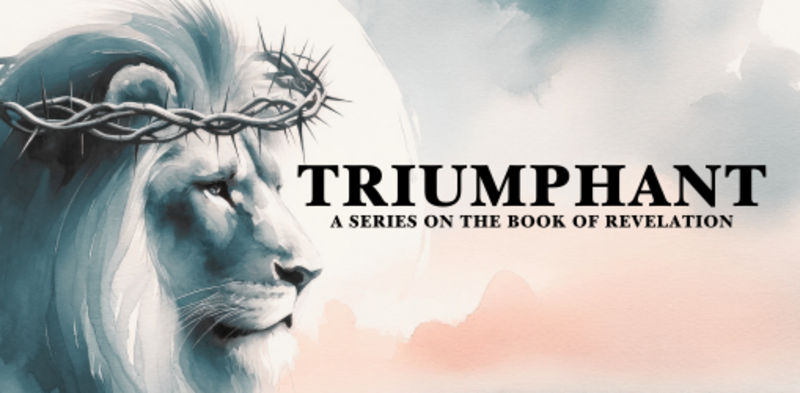
At the appointed time, the Son of David was “despised and rejected by men” (Isa. 53:3). Wicked men condemned Him to a cross, where He bore a crown of thorns upon His brow, a reminder of sin’s curse. For six hours, from about nine in the morning until three in the afternoon, our Savior hung on that cross. Then He yielded up His spirit. Even there, He was Lord over death itself. As the seventh hour began, our dear Savior rested in death, His work on the cross complete. Do you hear the echo of creation? After six days of work, God rested on the seventh. Jesus was buried, and on the third day He rose from the grave. He ascended to heaven, where He reigns as the rightful and eternal King.
Ladies and gentlemen, the Son of David is coming back! Now is the day of salvation. When the final trumpet sounds, the time to turn from sin to the Savior will come to an end. Every eye will see Him, and the tribes of the earth will wail on account of Him (Rev. 1:7).
But think, my dear friends, of what that day will mean for every blood-bought saint who belongs to the Lamb. The King who is coming is the Savior who wore those thorns for us!
The Kingdom of God is Certain
The first hymn in Revelation 11 comes from loud voices in heaven. The second comes from the lips of the twenty-four elders. And what do they sing?
“We give thanks to you, Lord God Almighty, who is and who was, for you have taken your great power and begun to reign. The nations raged, but your wrath came, and the time for the dead to be judged, and for rewarding your servants, the prophets and saints, and those who fear your name, both small and great, and for destroying the destroyers of the earth.” (vv. 17-18)
What does this hymn teach us? The nations can rage with their swords, horses, chariots, guns, tanks, and ballistic missiles, but all their might cannot keep the Lord God Almighty from reigning! Listen to how Isaiah describes them. “Behold, the nations are like a drop from a bucket, and are regarded as a speck of dust on the scales; behold, He lifts up the islands like fine dust” (Isa. 40:15).
On Thanksgiving Day, you’ll eat. Some of you will get on the scale a few days later, and I can promise you one thing. Whatever that scale says, a speck of dust had nothing to do with it! Now think about what Isaiah is saying. Take all the military might of every nation on earth and put it on the scale. Before the Lord God Almighty, the weight of the nations combined is that of a dust particle!
Listen to Psalm 2 and notice how the Lord answers the nations when they rage against His King.
“Why do the nations rage and the peoples plot in vain? The kings of the earth take their stand and the rulers gather together, against the LORD and against His Anointed One: “Let us break Their chains and cast away Their cords.” The One enthroned in heaven laughs; the Lord taunts them. Then He rebukes them in His anger, and terrifies them in His fury: “I have installed My King on Zion, upon My holy mountain.” (Psalm 2:1-6; BSB)
Now hear the elders again. “The nations raged, but your wrath came” (Rev. 11:18). This is the Day of the LORD. John will show us that day again in the harvest of the earth (14:14–20), in the gathering of the kings for battle (16:14), and in the return of the King Himself (19:11–21). On that day, the dead will be judged. We have already seen how the nations respond when they face the wrath of the Lamb. Remember what happened when He opened the sixth seal:
The sky receded like a scroll being rolled up, and every mountain and island was moved from its place. Then the kings of the earth, the nobles, the commanders, the rich, the mighty, and every slave and free man hid in the caves and among the rocks of the mountains. And they said to the mountains and the rocks, “Fall on us and hide us from the face of the One seated on the throne, and from the wrath of the Lamb. For the great day of Their wrath has come, and who is able to withstand it?” (Rev. 6:14-17; BSB)
Those who worship the beast will hide in terror. But, brothers and sisters, if you belong to the Lamb, you have every reason to rejoice at His coming! The One who comes to judge the earth is the very One who shed His blood for you. On that day, you will know His kindness. How so? Listen to what the elders thank Him for. The time has come for “rewarding your servants, the prophets and saints, and those who fear your name, both small and great” (Rev. 11:18).
The twenty-four elders represent the twelve tribes of Israel and the twelve apostles, and they sing their hymn of thanksgiving on behalf of all God’s people. Some looked forward to the salvation the Son of David would bring. We look back to the cross, where that same Son of David made atonement for our sins by His own blood. His salvation is for all who fear His name, both small and great. For Christians, the seventh trumpet brings “good news of great joy” (Luke 2:10). The Savior whose birth the angel announced is the King who is coming back! For those who worship the beast because they do not know the Lamb, His coming is terrible news.
Now think about how this chapter ends. The temple in heaven is opened, and John sees the ark of the covenant (Rev. 11:19). What would the sight of that ark have meant to Israel? In the wilderness, the ark reminded the people that God dwelt among them. Years later, when it stood in the temple, it still bore witness to His presence. Yet only the high priest could enter the Most Holy Place where the ark stood, and he entered on the Day of Atonement. The ark reminded Israel both of the nearness of God and of the holiness of the God who had drawn near.
Don’t you find it fascinating that when the seventh trumpet sounds, heaven announces the reign of the true and better Son of David? “The kingdom of the world has become the kingdom of our Lord and of his Christ, and he shall reign forever and ever” (Rev. 11:15). Before a single bowl of wrath is poured out, John sees that ark. The bowls call to mind the Day of Atonement as God removes evil from His creation and judges those who remain in their sins. But think of what the sight of that ark means for you who belong to the Lamb. The King who will judge the nations is the very One who shed His blood for you. And the God who promises to reward His servants, both small and great, is the same God who declared His name to Moses:
The LORD passed before him and proclaimed, “The LORD, the LORD, a God merciful and gracious, slow to anger, and abounding in steadfast love and faithfulness, keeping steadfast love for thousands, forgiving iniquity and transgression and sin, but who will by no means clear the guilty, visiting the iniquity of the fathers on the children and the children’s children, to the third and the fourth generation.” (Exod. 34:6-7)
All of history is moving toward the day when “the kingdom of the world” will become “the kingdom of our Lord and of his Christ” (Rev. 11:15). For those of us who belong to the Son of David, the ark of the covenant reminds us of the mercy we have received. The Lamb of God bore the Father’s wrath in our place. For the wicked, that same ark stands as a warning of the holy wrath that will consume those who remain in their sins.
Brothers and sisters, the King who is coming is the Lamb who shed His blood for us! Is it any wonder the elders fall on their faces before Him? Even now we can join them in saying, “We give thanks to you, Lord God Almighty, who is and who was, for you have taken your great power and begun to reign” (Rev. 11:17).

